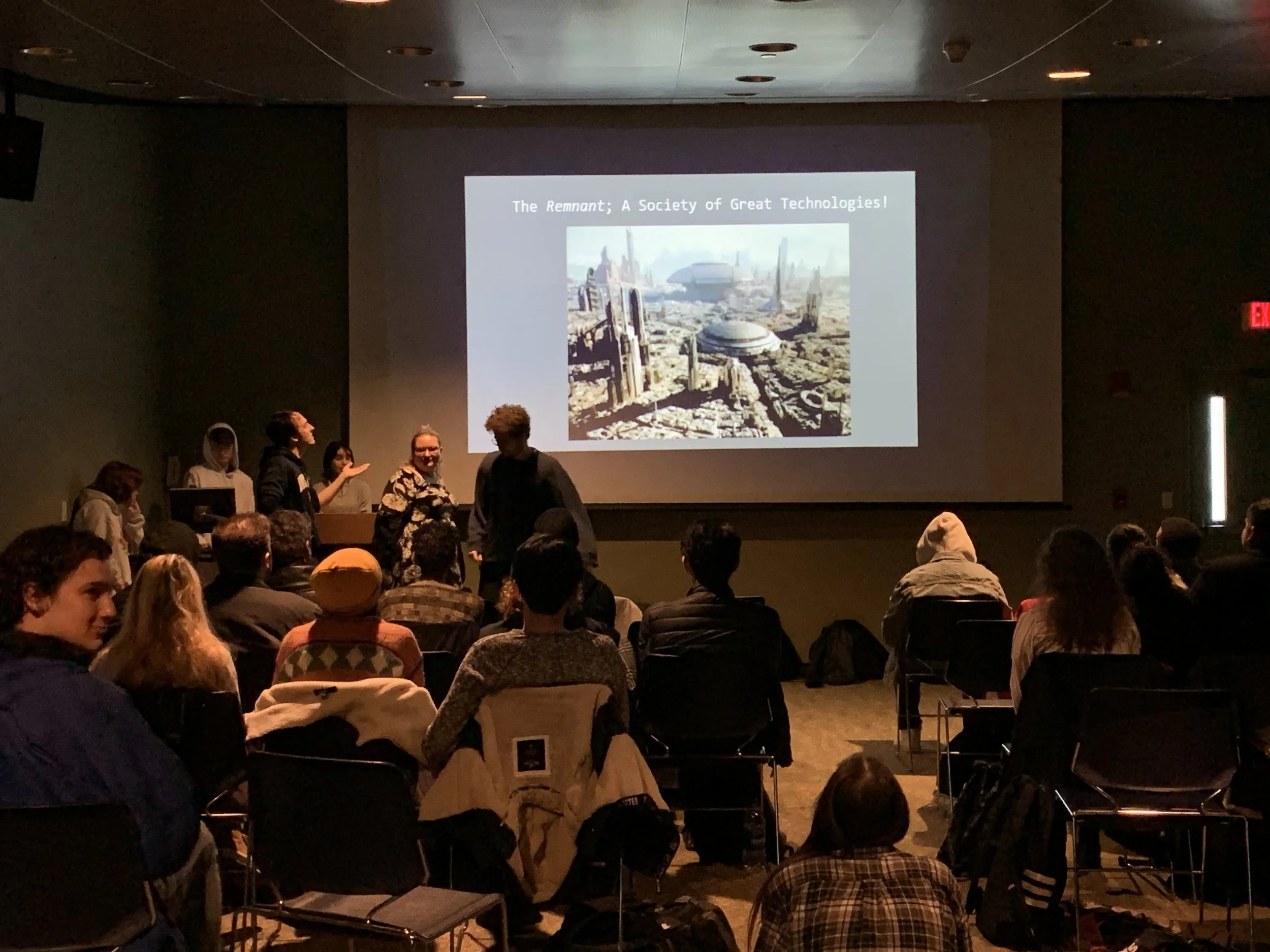
Teaching is infrastructure
I design learning environments that build long-term capacity-shared language, repeatable frameworks, and rehearsal practices teams can keep using after I leave.
Capacity-building outcomes
• A shared vocabulary that makes complexity discussable.
• Frameworks that can be repeated without the original facilitator.
• Prototypes (worlds, scenarios, interfaces, rehearsal rituals) that make strategy operational.
Offering 1: University teaching
I teach immersive narrative, transmedia storytelling, spatial narrative, and participatory systems across university and international programs-integrating performance craft with game logic, systems thinking, and emerging media.
• Common themes: liveness + agency, space as causality, world rules, participatory ethics, and the translation of narrative into behavior.
• Formats: semester courses, intensive studios, visiting professorships, thesis mentoring, and curriculum design.
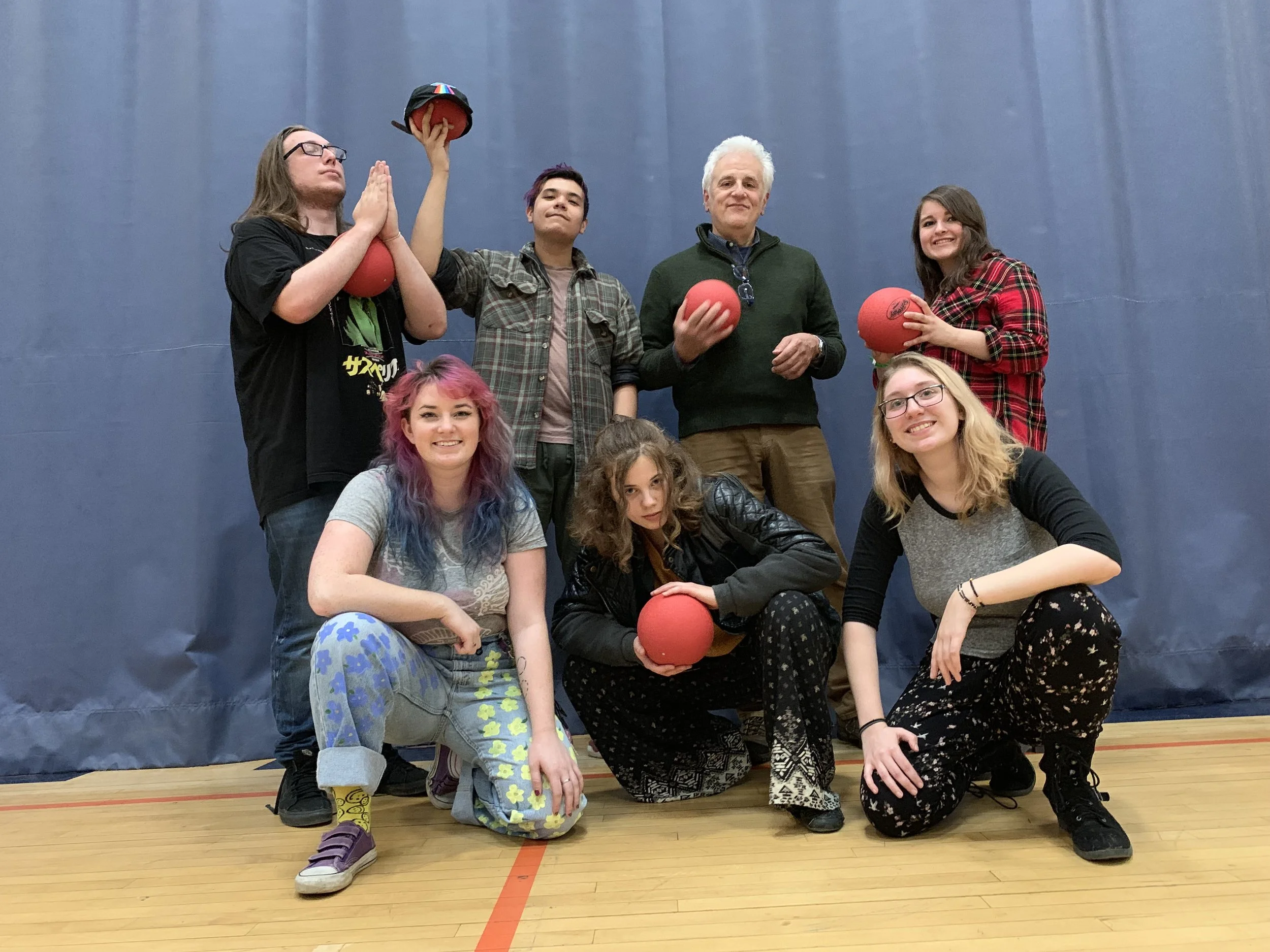
Offering 2: Executive / professional workshops
Workshops for leadership teams, creative companies, and institutions who need strategy that holds under uncertainty-and who want methods that go beyond planning decks.
• Strategic Simulation Labs (Simulation Theory for Future Strategy)
• Worldbuilding for Institutions (narrative alignment + operating mythology)
• Spatial Narrative for Teams (how environments train attention, trust, and decision-making)
• Technology as Meaning Layer (AR/AI/game logic as coherent meaning systems)
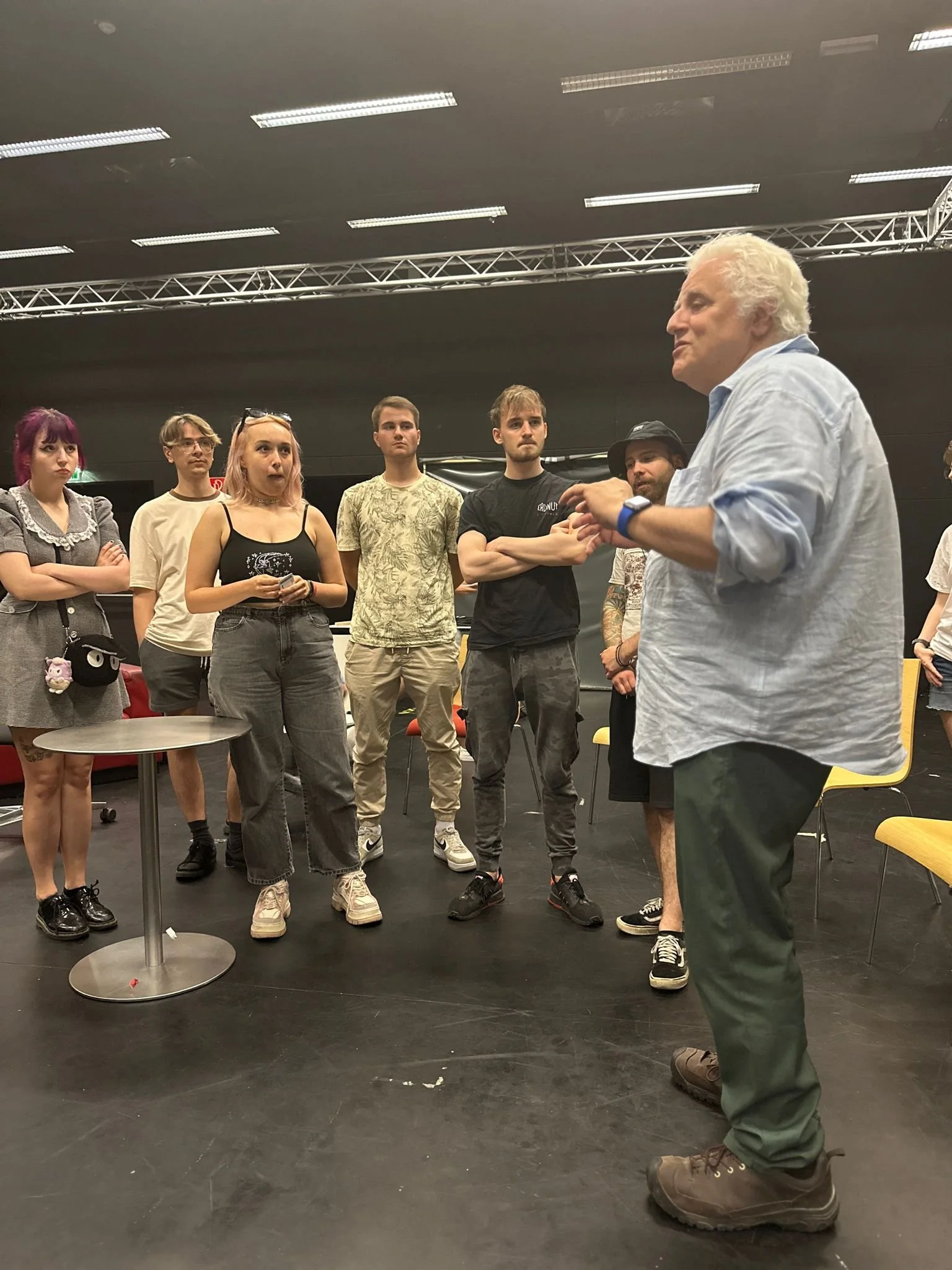
Offering 3: Custom institutional labs
For organizations facing complex transformation-where the real work is not deciding what to do, but redesigning the conditions that make different behavior possible.
• Lab outputs: rehearsal protocols, scenario worlds, decision rituals, interface/communication guidelines, and training artifacts.
• Best fit: cross-disciplinary groups working across culture, geography, or institutional silos.
Sample frameworks
• Spatial Narrative Diagnostic: identify the invisible rules your environment is enforcing.
• World Rules Map: incentives + rituals + interfaces + roles + thresholds.
• Rehearsal Protocol: repeatable simulation exercises for decision quality.
• Director's Compass: Time / Design / Site / Intent / Persona (for cross-platform experiences).